
Some weeks, the hardest part of any season isn’t the running. It’s everything athletes have to fit around it.
A Tuesday invitational, Thursday dual meet or Saturday invitational, five days of classes, homework, late bus rides, and maybe a part-time job thrown into the mix. Somewhere in there, growing teenagers are supposed to eat enough, stay hydrated, get some sleep, and show up ready to race again.
It’s a lot to manage.
1. Think Beyond Race Day
For coaches, the challenge isn’t turning every athlete into a nutrition expert. It’s helping them build practical habits that work with their real lives, especially during weeks when competition and recovery happen almost back-to-back.
Here are six ways to make fueling and hydration less complicated and more consistent.
One of the biggest mistakes young runners make is treating hydration and nutrition as something to worry about only on meet day.
But Tuesday’s race doesn’t begin with Tuesday’s breakfast. The body’s readiness reflects the meals, fluids, training, and recovery that came before it.
Encourage athletes to drink regularly throughout the school day rather than trying to catch up by chugging a large bottle immediately before racing.
A few practical habits help:
- Bring a refillable water bottle to school and refill it throughout the day.
- Drink with meals and snacks, not just during practice.
- Pay attention to thirst and changes in urine color, while recognizing these aren’t perfect measures of hydration.
- Adjust fluid intake for heat, humidity, longer workouts, and individual sweat losses.
Water is generally sufficient for normal daily hydration and shorter activities. During prolonged, vigorous exercise or heavy sweating, sports drinks containing electrolytes and carbohydrates may be helpful.
The goal isn’t to drink as much as possible. Excessive water intake can be dangerous, too.
Consistent habits beat last-minute fixes.
2. Build a Fueling Plan Around the School Bell
Most high school athletes don’t have the luxury of eating exactly when a sports nutrition textbook recommends.
Lunch might be at 10:45 a.m. Practice starts at 3:15. The bus leaves for an away meet at 2:30. And somewhere in between, an athlete realizes they haven’t eaten in five hours.
Help runners plan around those gaps.
A substantial, familiar meal several hours before racing, followed by a lighter carbohydrate-rich snack closer to competition, works well for many athletes.
Good options include bananas, pretzels, toast, crackers, granola bars, or other foods they’ve practiced eating before running.
But don’t insist on one perfect menu. Some athletes tolerate food relatively close to competition. Others need more time to digest.
Encourage runners to experiment during ordinary training days rather than trying something new before an important race.
And remind them that skipping meals to feel “lighter” isn’t a smart race strategy.
Young runners need enough energy for training, competition, school, and the physical demands of growing.
3. The Next Race Starts When This One Ends
Here’s where double-meet weeks require a little more planning.
After Tuesday’s race, the body needs to replenish carbohydrate stores, repair muscle tissue, and replace fluids lost through sweat.
And if the Saturday invitational brings another competition, there isn’t much time to waste.
Encourage athletes to pack a recovery snack containing carbohydrates and some protein.
Simple options include:
- Chocolate milk and a banana
- Yogurt and granola
- A turkey or peanut butter sandwich
- Crackers, cheese, and fruit
- A familiar snack followed by a regular meal at home
Eating soon after finishing is especially useful when the next hard effort is approaching. But recovery doesn’t depend on hitting one magical 30-minute deadline.
What matters is getting enough food and fluids over the following hours and days.
Remind athletes that a small snack on the bus is a starting point, not a replacement for dinner.
And on the day between meets, the training plan should allow athletes to recover rather than piling another demanding workout onto an already busy week.
4. Have a Plan for Athletes Who Struggle to Eat Before Racing
Not every runner approaches race day with a healthy appetite.
Nerves can upset stomachs. Early start times can make breakfast unappealing. And some athletes have learned through experience that certain foods simply don’t sit well before competition.
Instead of insisting that everyone eat the same thing at the same time, help athletes develop individual routines.
Smaller, familiar meals or snacks may be easier to tolerate. Liquid options can sometimes help athletes who struggle with solid food close to competition.
The key is practicing those routines before meet day.
For athletes with persistent nausea, gastrointestinal problems, or difficulty eating enough to support their training, involve parents or guardians and a qualified healthcare professional or sports dietitian.
A coach’s job isn’t to prescribe a specialized diet. It’s to recognize when an athlete needs additional support.
5. Make Good Habits Easier for the Whole Team
Here’s a practical question worth asking: Are we making it easy for athletes to follow the advice we’re giving them?
Telling runners to eat well and stay hydrated is one thing. Building routines that support those habits is another.
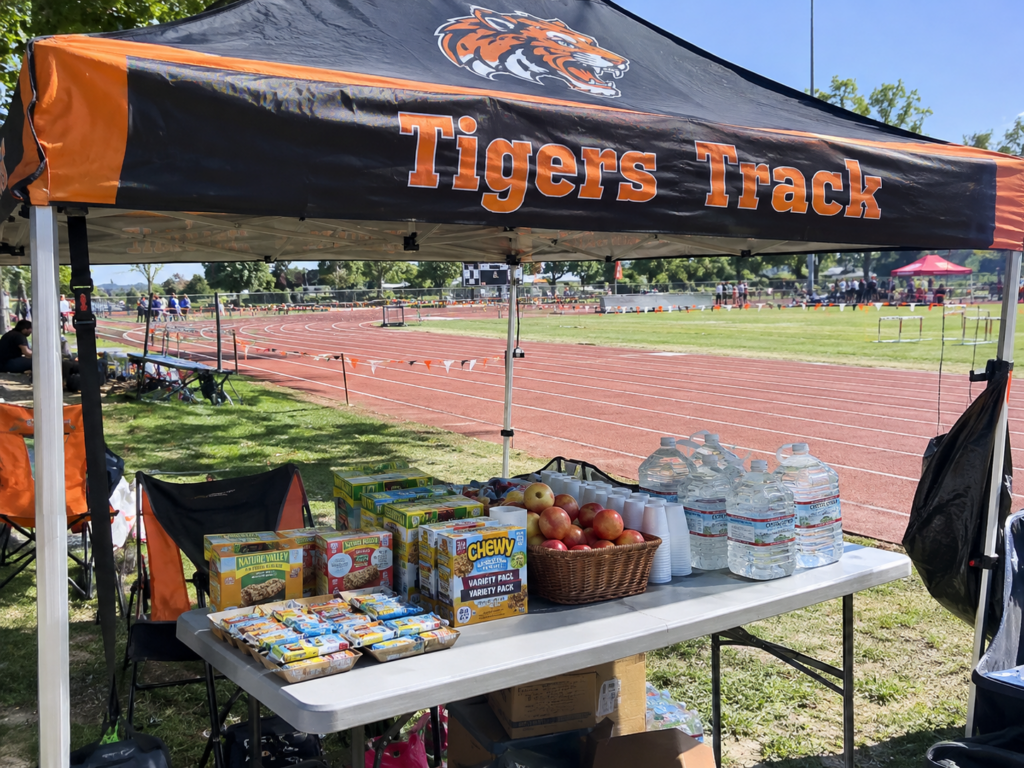
Consider setting aside a designated space at the team tent for water and snacks. Remind athletes to pack food before away meets. If team meals are planned, make sure everyone knows when and where they’ll happen.
Upperclassmen can help younger runners understand what to bring, just as they teach them how to prepare for race day.
And remember that not every athlete has the same resources.
Some students have refrigerators full of food and parents who can pack elaborate meals. Others may rely heavily on school breakfast and lunch or have limited access to food between dismissal and practice.
If possible, keep a few simple snacks available without making a big production out of who needs them.
Sometimes the most useful thing a coach can provide isn’t another nutrition lecture. It’s a granola bar and a little understanding.
6. Teach Athletes That Food Is Fuel, Not a Reward
Distance running teaches discipline. It requires consistency, patience, and the willingness to do hard things.
But there’s a line coaches need to be careful not to cross.
Young runners can easily absorb the idea that eating less makes them faster, that certain foods are something they have to “earn,” or that their bodies need to look a particular way to be successful.
Those messages can do real harm.
Athletes who consistently don’t eat enough may struggle with fatigue, poor recovery, recurrent injuries, and declining performance. More importantly, inadequate fueling can affect their overall health and development.
Coaches can make a difference simply through the language they use.
Avoid commenting on athletes’ weight or appearance. Don’t praise someone for skipping meals or exercising to compensate for what they ate. And don’t make food something athletes deserve only after a good race.
Instead, reinforce a healthier message:
We eat because our bodies need nourishment. We hydrate because our bodies need fluids. We rest because recovery is part of being healthy.
Not because we won.
Not because we ran a personal best.
And not because we earned it.
Think about the freshman who quietly admits they didn’t have breakfast. Or the senior who’s exhausted but feels guilty taking an extra serving at dinner.
A coach who responds with kindness rather than judgment may teach a lesson far more important than anything on the training schedule.
These athletes are young people first, runners second. Their bodies deserve care regardless of what the stopwatch says.
Take Care of the Athlete, Not Just the Performance
Double-meet weeks will probably never feel easy. There will always be late buses, hurried meals, forgotten water bottles, and the occasional athlete who shows up with nothing but a bag of chips.
That’s part of coaching teenagers.
But with a little planning, good communication, and realistic expectations, coaches can help athletes develop habits that serve them well beyond season.
Someday, these runners will be responsible for managing their own health through busy careers, demanding schedules, family responsibilities, and everything else adulthood brings.
And maybe they’ll remember that their coach taught them something simple but important:
Taking care of yourself isn’t a luxury, a weakness, or a reward for working hard. It’s what allows you to keep showing up for the things that matter.